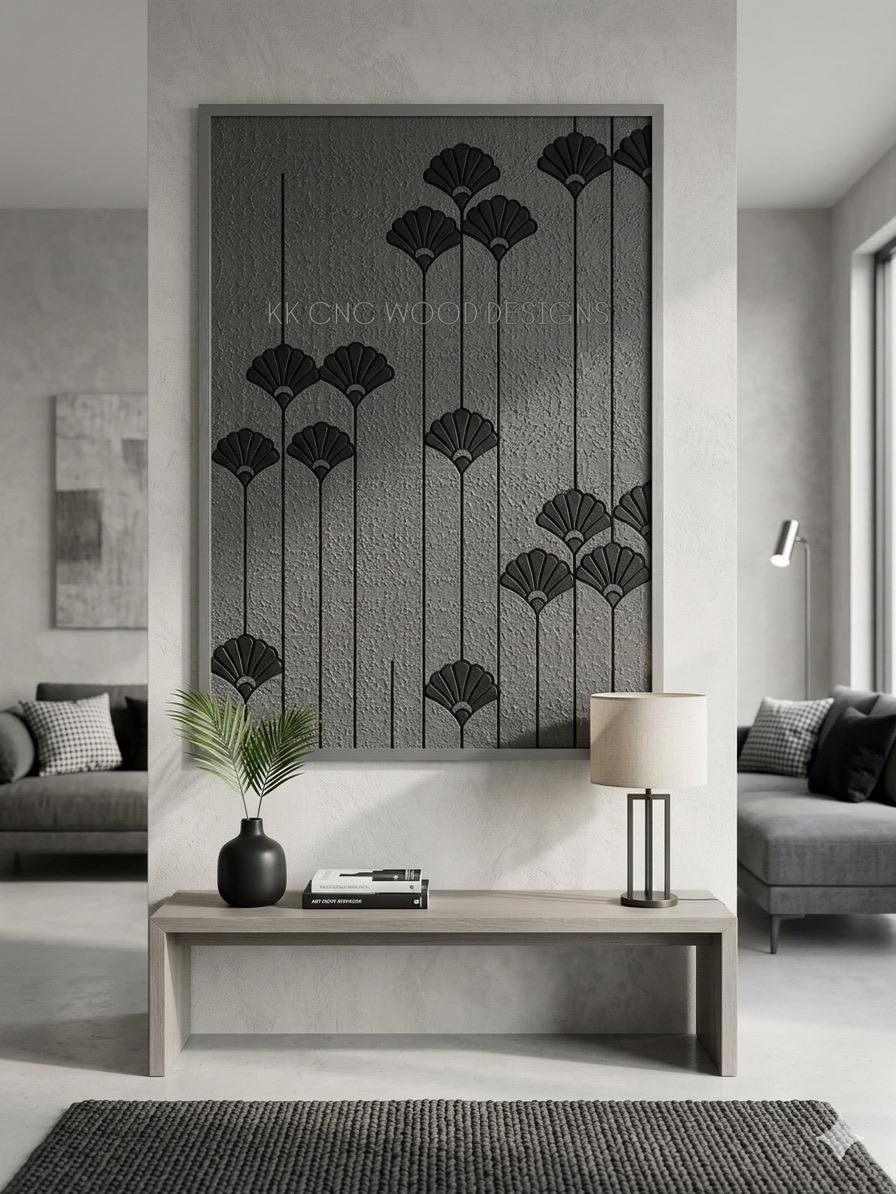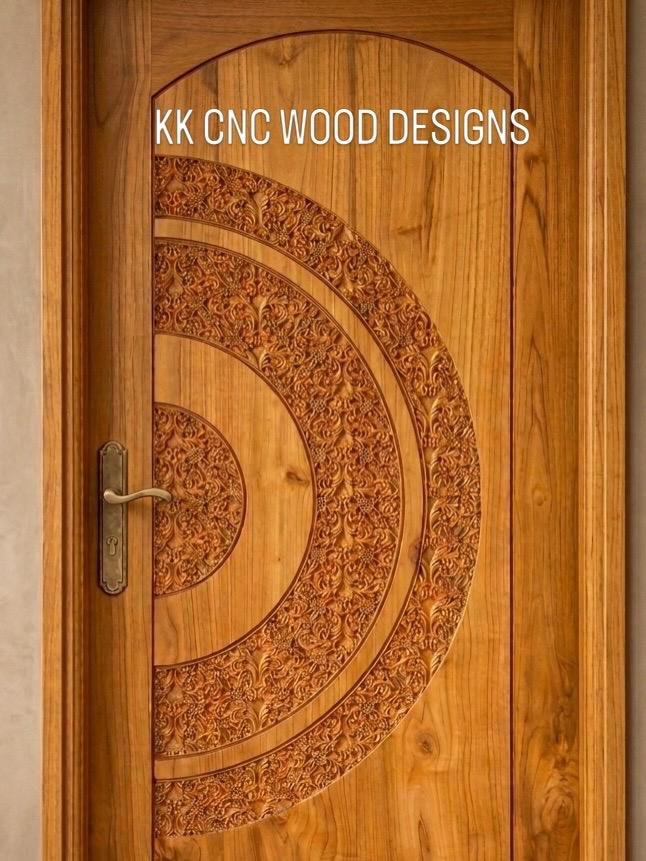
CNC-routed kitchen shutters make it possible to introduce grooves, frames, geometric patterns or subtle decorative details without relying on standard factory styles. Since kitchen fronts are used every day, the design must work as a durable surface as well as a visual feature.
Begin with the full kitchen composition
A pattern that looks attractive on one shutter may become too busy when repeated across an entire kitchen. Review tall units, base cabinets, overhead shutters and drawers together. Often the strongest solution is to use a detailed pattern on selected units and a simpler coordinated treatment elsewhere.
The pattern should also respond to shutter sizes. Very narrow drawers and wide pantry shutters may need related versions of the same design so the proportions remain consistent.
Select groove depth carefully
Deeper grooves create stronger shadow and a handcrafted appearance, but they also collect more dust and require careful finishing. Fine shallow routing is easier to maintain and suits minimal kitchens. Rounded internal corners and sensible groove widths can make regular cleaning more practical.
Coordinate handles and hardware
Handle profiles, knobs and edge pulls must not interrupt important parts of the routed design. If the kitchen uses handleless channels, the CNC pattern should leave comfortable grip zones and sufficient strength near the edge. Hinge positions and boring details also need to be coordinated with the pattern before machining.
Choose a finish for daily use
Kitchen shutters face fingerprints, steam and repeated cleaning. The coating system must suit the selected substrate and routed profile. Matt finishes can create a refined look, while higher sheen levels reflect more light and make surface variations more visible.
Ask how edges and carved areas will be sealed, primed and finished. A beautiful face with poorly prepared edges will not deliver a professional result.
Think about colour across the room
Detailed shutters often work best in a restrained colour. Warm neutrals, muted greens, charcoal and off-white can reveal the routing without overwhelming the room. Two-tone schemes can place the CNC detail on overhead or feature units while keeping the remaining cabinetry quiet.
Plan for maintenance
Use a soft cloth and suitable mild cleaner rather than abrasive pads. Wipe spills before they dry inside grooves. Hardware alignment should be checked periodically so shutters do not rub against adjacent fronts and damage finished edges.
Before requesting a quotation, share shutter dimensions or the kitchen elevation, required quantity, pattern reference, material preference, handle type and finish direction. KK CNC Wood Designs can review whether one pattern should be repeated or adapted across different shutter sizes for a coherent, production-ready result.
Planning a similar CNC project?
Share your dimensions, reference images and preferred finish. We’ll help translate the idea into a practical custom quotation.
Discuss your project